What Parents Should Do Now About BabyFund in March 2026
If you are hearing new questions about BabyFund this spring, the main issue is timing.
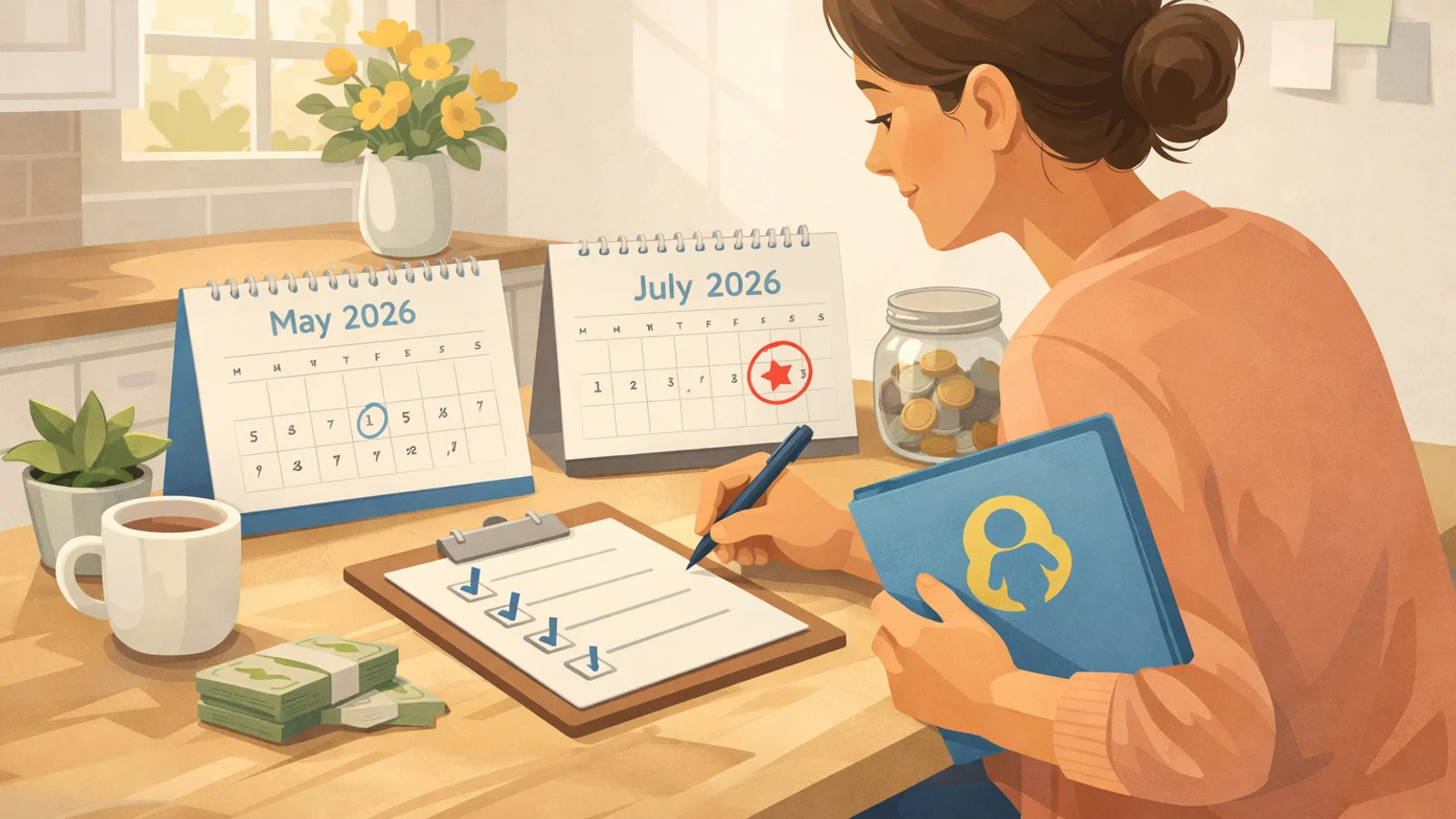
Public guidance around the 2026 rollout points to activation notices around May 2026 and says contributions are expected to begin on July 4, 2026. The IRS also said proposed regulations for the new child account framework were released on March 6, 2026, which means families should expect details to keep evolving before contributions open. (irs.gov)
For BabyFund families, that creates a practical question: what should you do now, before contributions actually open?
The short answer
Use March through June 2026 to get ready, not to rush.
A smart plan right now is to:
- confirm your child’s identifying information is accurate
- watch for activation or enrollment instructions around May 2026
- decide who in your family may want to contribute
- set a realistic savings amount for after July 4, 2026
- avoid assuming every operational detail is final until official guidance is posted
That last point matters. The current federal framework is real, but the operating rules are still being clarified through guidance and implementation materials. (irs.gov)
What is new right now
The biggest recent development is that Treasury and the IRS have started publishing implementation guidance for these accounts. In its March 6, 2026 announcement, the IRS said the pilot program was created under the law enacted on July 4, 2025, and described the federal $1,000 deposit for each eligible child in the pilot program. (irs.gov)
Other current public summaries are broadly aligned on two dates parents care about most:
- activation notices beginning around May 2026
- contributions starting July 4, 2026
That means the immediate planning window is happening now, in March 2026. (babycash.org)
Questions parents are asking now
1. Do I need to do something today?
Probably not today, but you should prepare now.
If your family may be eligible, the useful work in March 2026 is administrative: keep records organized, verify your child’s information, and be ready for enrollment or activation instructions if they arrive around May 2026. Public reporting and guidance consistently suggest that money cannot be contributed before July 4, 2026. (irs.gov)
2. Can I contribute before July 4, 2026?
Current public guidance says no. Multiple sources state that contributions are not expected to begin until July 4, 2026. (wtwco.com)
3. Is the $1,000 enough on its own?
It is a starting point, not a complete savings plan.
Some public commentary notes that the initial deposit may be meaningful, but many planners still view family savings decisions separately from the headline amount. That is one reason BabyFund should be framed as a planning tool and organizational help for parents, not as a promise that one account solves every future education or financial need. (whitehouse.gov)
4. Should grandparents or other supporters wait?
They should prepare now and fund later.
If relatives want to help, this is a good time to discuss the amount, timing, and whether gifts will be one-time or recurring after July 4, 2026. The exact mechanics may still depend on final implementation details. (irs.gov)
A simple March 2026 checklist for BabyFund families
Here is the practical version.
Do now
- Gather your child’s basic records.
- Confirm names, dates of birth, and Social Security information are correct in your own files.
- Make a list of anyone who may want to contribute.
- Pick a target monthly amount you could afford starting in July 2026.
- Set a reminder to check for activation instructions in May 2026.
Do not do yet
- Do not assume contributions can be made before July 4, 2026.
- Do not rely on unofficial summaries alone for account-opening steps.
- Do not build your full child savings strategy around one future rule that could still be refined.
How BabyFund should talk about this moment
For parents, the right tone is calm and specific.
BabyFund is not a government agency, and it should not present itself as one. Its role is better framed as helping families understand timelines, organize next steps, and prepare to act when the contribution window opens. Based on current public information, the clearest dates to highlight are:
- March 6, 2026: IRS announced proposed regulations and implementation details for the pilot framework
- around May 2026: expected activation notices begin
- July 4, 2026: contributions are expected to begin
Those dates are specific enough to be useful without overpromising outcomes or legal certainty. (irs.gov)
Bottom line
If you are a parent looking at BabyFund right now, the best move is simple: prepare in spring, watch for notices in May, and be ready to contribute after July 4, 2026.
That is the practical window that matters as of March 18, 2026. And because federal implementation is still developing, BabyFund content should stay date-specific, cautious, and operationally useful rather than making guarantees. (irs.gov)